
In this edition of court judgments review, we look at the Shimla HC’s order that said “High speed” is relative and driving even at 10–30 km/h is negligent on a road crowded with people or cattle, Gujarat’s HC order that Six-month waiting period for divorce is “directory”, not “mandatory”, Gauhati HC order that age limits under the ART Act are based on scientific evidence relating to the maternal health risks, fetal outcomes, and child welfare, among others.
Shimla HC: “High speed” is relative, and driving even at 10–30 km/h is negligent on a road crowded with people or cattle
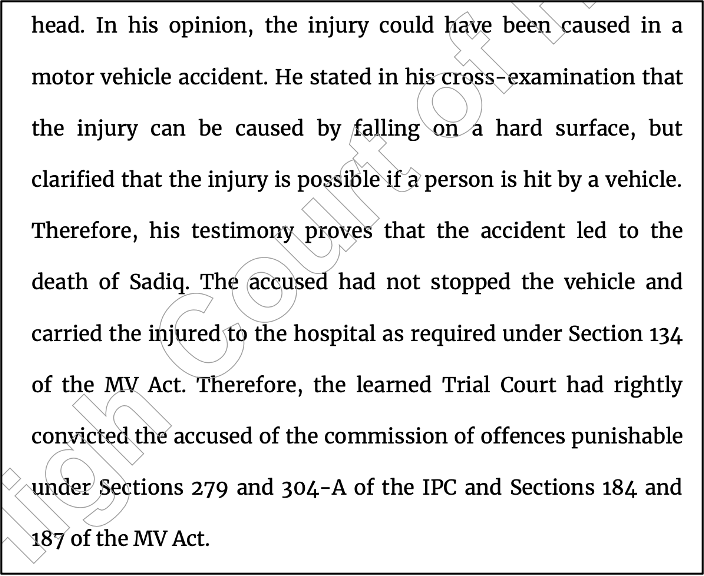
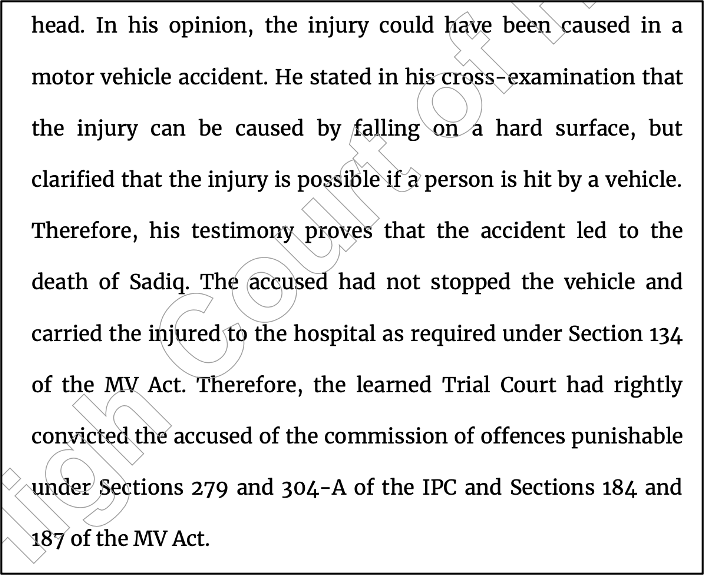
In the case, Param Jeet Singh vs. State of Himachal Pradesh, the petitioner challenged his conviction for causing a fatal accident in May 2006. While driving a Scorpio near the Banikhet Helipad, he hit a young child, Sadiq Ali, who was walking with cattle. The child died from head injuries, and the driver fled the scene. Both the trial and appellate courts found the petitioner guilty of rash and negligent driving, sentencing him to one year of imprisonment.
The Petitioner contended that he was falsely implicated and that there was no credible evidence connecting his vehicle to the crime. He argued that the witnesses could not reliably identify the driver or the vehicle at the time of the accident. The State, however, argued that the vehicle’s registration number was recorded immediately and that the front glass was found damaged when the car was intercepted, proving its involvement.
The Court observed that “high speed” is relative and driving even at 10–30 km/h is negligent on a road crowded with people or cattle. The Court emphasised that a driver has a legal duty to slow down when encountering pedestrians and livestock. Since the petitioner failed to reduce speed and hit the child on the wrong side of the road, his negligence was clearly established. The Court noted that in a “revision” petition, it cannot re-evaluate facts unless a major legal error exists.
Ultimately, the Court dismissed the petition and upheld the one-year sentence. It ruled that the previous courts had correctly analysed the evidence and that failing to slow down for pedestrians constitutes criminal negligence. The petitioner was ordered to serve his sentence as per the law.
Delhi HC: Mere earning in foreign currency does not entitle the wife to maintenance by mechanically converting it into Indian currency
In the case of Devika Jain vs. Sidharth Jain, the Delhi High Court dealt with two petitions- one by the wife seeking more maintenance and another by the husband seeking to reduce it. Previously, a Family Court had ordered the husband to pay ₹50,000 per month as interim maintenance to the wife. Both parties were unhappy with this amount and approached the High Court.
The husband is a software engineer working for Amazon in the USA, earning a high salary. The wife is also highly qualified with an IT degree and previously worked at a bank, but she left her job in late 2021 and is currently unemployed. Because the husband failed to submit his income documents to the Family Court, the court had made an initial guess to set the maintenance at ₹50,000. The wife argued that, given her husband’s massive income and the high standard of living they shared, ₹50,000 was far too low. The husband argued that the wife is highly educated and has the “capacity to earn,” claiming she deliberately stayed unemployed just to get maintenance from him. He also argued that his high salary in dollars shouldn’t be simply converted to rupees because his living expenses in the USA are also very high.
The Court observed that a husband cannot avoid his duty to support his wife and noted that “capacity to earn” is not the same as “actual earning.” Crucially, the Court held that merely earning in foreign currency does not automatically entitle a wife to a massive payout by simply converting dollars to rupees. It stated that courts must consider the actual cost of living in the country where the husband resides. However, because the wife is currently unemployed and the husband failed to fully disclose his finances, a reasonable increase was necessary.
The High Court allowed the wife’s petition and dismissed the husband’s petition. It increased the interim maintenance from ₹50,000 to ₹1,00,000 per month. This amount is to be paid from the date she first applied for maintenance, and the husband was given 12 weeks to clear any pending payments.
Ahmedabad HC: Six-month waiting period for divorce is “directory” and not “mandatory
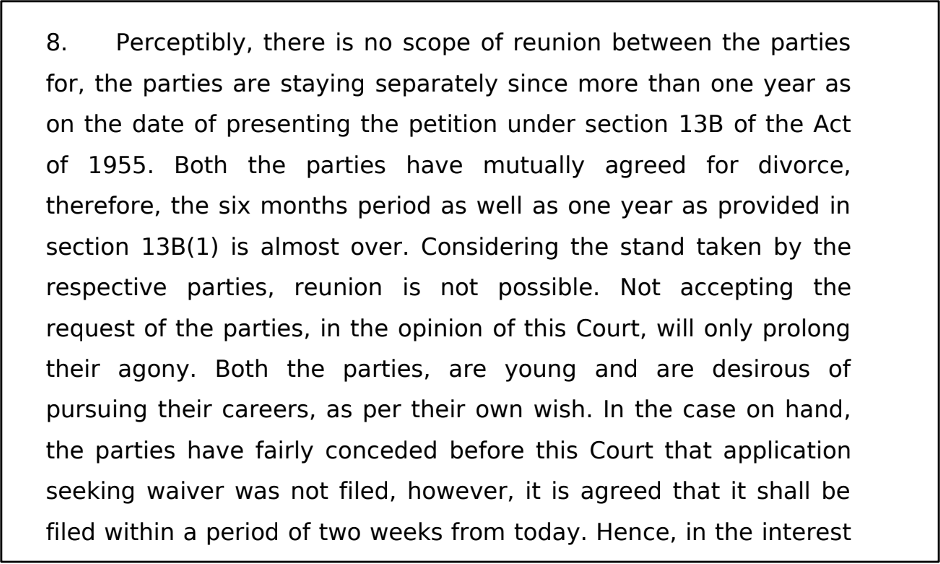
In the case X vs. Y, the parties were married in December 2023 but began living separately just a month later, in January 2024. The husband moved to the UK for higher studies and intended to settle there, while the wife remained in Ahmedabad to pursue her career in India. In April 2025, they jointly filed for divorce by mutual consent. However, the Family Court in Ahmedabad rejected their application in August 2025. The lower court argued that the mandatory six-month “cooling-off” period had not been completed and that the couple had not filed a formal request to skip this waiting period.
Both parties jointly appealed to the High Court, arguing that their marriage had completely broken down and there was no chance of getting back together. They explained that their career paths were in different countries and that they had already settled all issues regarding alimony. They contended that the Family Court should have given them a chance to file for a waiver of the waiting period instead of simply dismissing their case.
The High Court observed that the law regarding the six-month waiting period is “directory” and not “mandatory.” This means that if a marriage has clearly failed and a waiting period only causes more pain without any hope for reconciliation, the court has the power to skip it. The Court noted that since the couple had been living apart for over a year and were firm in their decision to live in different countries, forcing them to stay legally married served no purpose.
The High Court allowed the appeal and set aside the Family Court’s rejection. The divorce case was restored, and the parties were given two weeks to file a formal request to waive the waiting period. The High Court directed the Family Court to decide the matter quickly, ideally within six months.
Gauhati HC: Age limits under the ART Act are based on scientific evidence relating to the maternal health risks, fetal outcomes, and child welfare
The petitioners in this case are a married couple who were unable to conceive naturally and began seeking medical help for Assisted Reproductive Technology (ART) in 2020. Their treatment was interrupted by the COVID-19 pandemic. When they later approached a fertility clinic in March 2024, the hospital refused to treat them because they exceeded the age limits set by the Assisted Reproductive Technology (Regulation) Act, 2021. The couple challenged the constitutional validity of Section 21(g) of this Act, which sets the upper age limit at 50 years for women and 55 years for men.
The petitioners argued that the strict age limit violates their fundamental rights to life and personal liberty, which includes the right to make reproductive choices. They claimed the law is arbitrary because it ignores individual medical fitness, and that since they started treatment before the Act was passed, it should not apply to them. The respondents (Union of India and State authorities) argued that the law was created to address scientific, ethical, and child welfare concerns. They maintained that age limits are a matter of legislative policy based on maternal health risks and the welfare of the child.
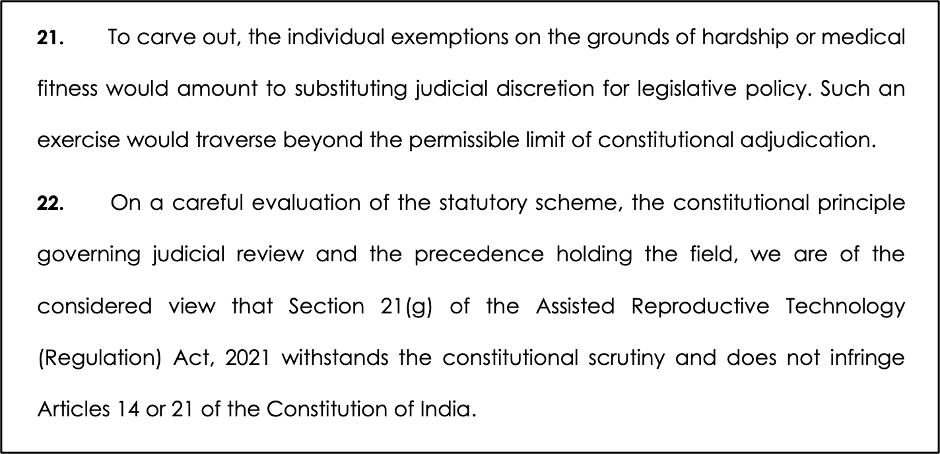
The Court observed that while reproductive autonomy is part of personal liberty, it is not absolute and can be regulated for social welfare and public health. The Court noted that the age limits are based on medical science and ethical standards aimed at protecting both the mother and the future child. It further stated that fixing an age limit is a policy decision made by Parliament, and the Court should not second-guess that wisdom unless it is clearly irrational. Additionally, the Court ruled that starting treatment before the Act did not give the couple a “vested right” to continue if they no longer met the legal criteria.
The Gauhati High Court dismissed the writ petition, upholding the constitutional validity of Section 21(g) of the Act. The Court concluded that the age-based restrictions are safe, ethical, and do not violate the right to equality or the right to life. Consequently, the couple’s request to bypass the age limit was denied.
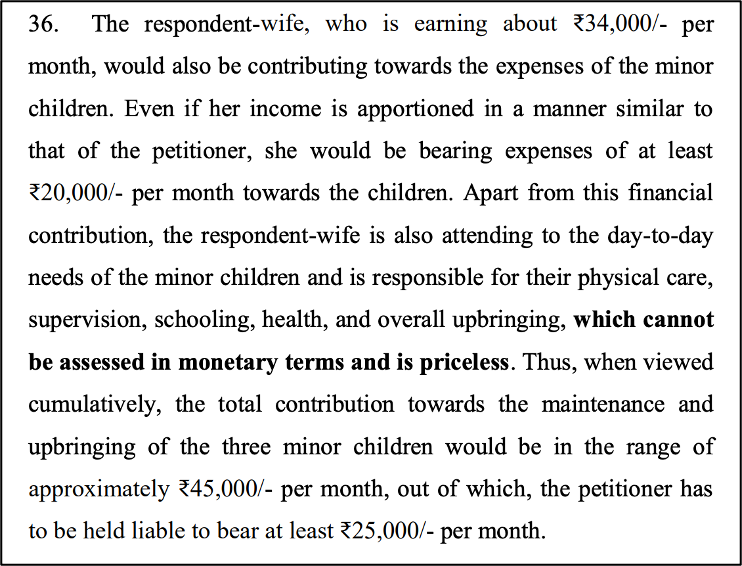
Delhi HC: Even if a mother is working, a father is not excused from his financial responsibilities
In this case, a husband and wife who married in 2014 and have three young children became involved in a legal dispute over maintenance. After the couple separated in 2022, the wife filed for support under the Domestic Violence Act. A lower court ordered the husband to pay ₹30,000 per month (₹10,000 for each child) as interim maintenance. The husband appealed this decision, claiming he only earned ₹9,000 a month working at his mother’s pharmacy and could not afford the payment. After his appeal was rejected by a Sessions Court, he approached the Delhi High Court.
The husband contended that because the wife earns around ₹35,000 per month, significantly more than his claimed income, she should bear the primary cost of the children’s upbringing. He also claimed his parents had disowned him and that his career was in decline. On the other hand, the wife argued that the husband was hiding his true wealth. She pointed out that he holds an MBA and a pharmacy diploma, uses a credit card, and still works in his family’s business. She emphasised that she was already single-handedly managing all the daily needs and care for their three children without seeking any support for herself.
The High Court observed that the husband’s claim of earning only ₹9,000 was “beyond comprehension” given his high qualifications and past tax returns, which showed a much higher income. The judge noted that the husband appeared to be deliberately hiding his true earnings to avoid his duties. The Court highlighted that even if a mother is working, a father is not excused from his financial responsibilities. It stressed that a “primary caregiver” mother already bears a massive, non-monetary burden of time and effort that cannot be ignored, and the father must contribute fairly to ensure the children live with dignity.
Ultimately, the High Court partially allowed the husband’s petition by making a slight adjustment to the amount. While the judge agreed the husband must pay, the court reassessed his income more conservatively at ₹40,000 per month and reduced the total maintenance from ₹30,000 to ₹25,000 per month. The Court ruled that parenthood is a permanent responsibility that cannot be avoided through misleading financial claims. The husband was directed to pay this revised amount for the three children, starting from the date the case was first filed.