

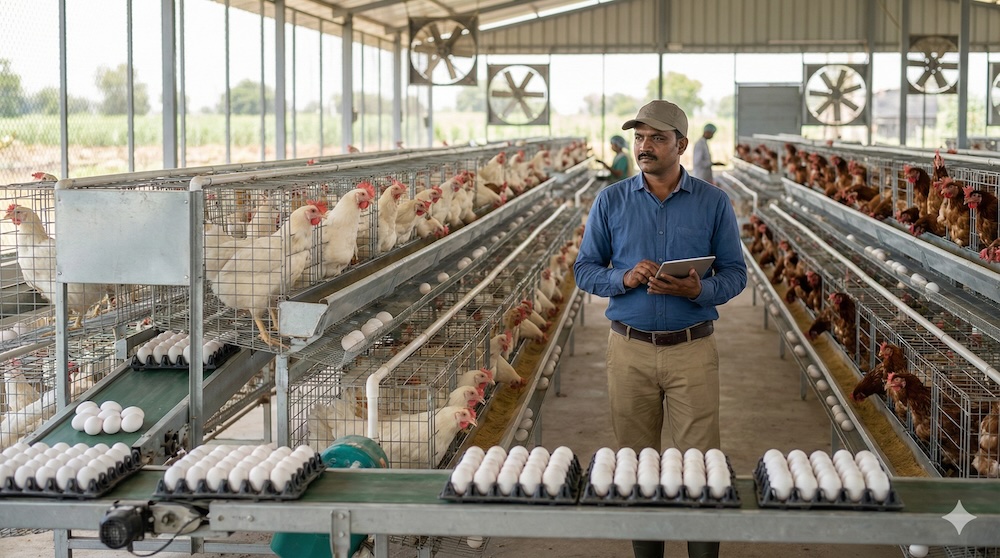
TL;DR India’s egg production has grown nearly 80% in the past decade, reaching 149 billion eggs in 2024-25. The sector remains highly concentrated, with five states producing nearly two-thirds of all eggs. While commercial farms dominate output, backyard poultry continues to support rural food security. Per capita availability has improved to 106 eggs a year, but wide regional gaps persist.
Context
India’s egg market is currently cracking under pressure. Eggs have been in the news recently for several reasons. Prices have risen sharply in many places, making this everyday source of protein less affordable for households. At the same time, reports of quality and safety issues have raised concerns among consumers. These developments have drawn attention to how eggs are produced, supplied, and consumed across the country. To look beyond the headlines, this article examines the latest data on egg production and availability in India, offering a clearer view of the trends shaping one of the country’s most common food items.
Who compiles this data?
The data comes from the Department of Animal Husbandry and Dairying (DAHD) under the Ministry of Fisheries, Animal Husbandry and Dairying. Its Animal Husbandry Statistics Division runs the Integrated Sample Survey (ISS) every year in rural and urban areas across all states and Union Territories to estimate the production of milk, eggs, meat and wool.
Where can I download clean & structured data related to poultry production in India?
Clean, structured, and ready-to-use datasets related to the total egg production, per capita availability of eggs, egg production by different breeds and many more can be downloaded from Dataful.
Key Insights
- India’s egg production rose from 82.93 billion in 2015-16 to 149.11 billion in 2024-25, an increase of about 80%.
- Production is heavily concentrated. Just five states, viz; Andhra Pradesh, Tamil Nadu, Telangana, West Bengal, and Karnataka, account for nearly 64% of the country’s total egg output, making national supply highly dependent on these specific regions.
- A significant change is visible in the North. Punjab’s production has slumped from a peak of 6.26 billion in 2022-23 to 5.06 billion in 2023-24. In contrast, Uttar Pradesh’s production increased to 6.11 billion eggs, effectively replacing Punjab as the region’s dominant supplier.
- In 2024-25, about 82.4% of India’s eggs came from improved fowls raised in commercial poultry farms, showing the sector’s heavy reliance on industrial-scale production.
- Production of desi fowls in commercial farms tripled from 1 billion to 3 billion eggs in a year between 2022-23 and 2023-24, probably as a response to growing demand for local or “safer” varieties.
- Duck eggs account for only about 1.1% of total production and largely come from backyard systems, with limited industrial involvement.
- Per capita egg availability in India has risen steadily from 65 eggs per person in 2015-16 to 106 eggs in 2024-25. Eight (8) States/UTs have reported more per capita availability than the national figure.
- While people in Andhra Pradesh and Telangana have access to over 500 eggs per year, residents in Uttar Pradesh and Bihar have access to fewer than 30. According to ICMR, an individual should consume 180 eggs per year.
Why does it matter?
Eggs are one of India’s most accessible sources of protein, especially for low- and middle-income households. The sharp rise in prices and uneven production patterns affect both nutrition and affordability. Heavy dependence on a few southern states and large commercial farms makes the supply chain vulnerable to disease outbreaks, feed costs, and transport disruptions. Meanwhile, the widening gap in per capita availability across states highlights deep regional inequalities in access to this essential food. Expanding production beyond southern states and supporting small farmers can help make India’s egg supply more balanced, resilient, and affordable.
Key Numbers
- Egg production (in billion):
2015-16: 82.93 → 2024-25: 149.11
- Per capita availability (eggs per person):
2015-16: 65 → 2024-25: 106
- Top producing states (share of total):
Andhra Pradesh, Tamil Nadu, Telangana, West Bengal, Karnataka — 64% combined
- Production by source (2024-25):
Commercial farms (improved fowls): 82.4% of total output
Note: Featured image generated with Gemini Nano Banana Pro


