

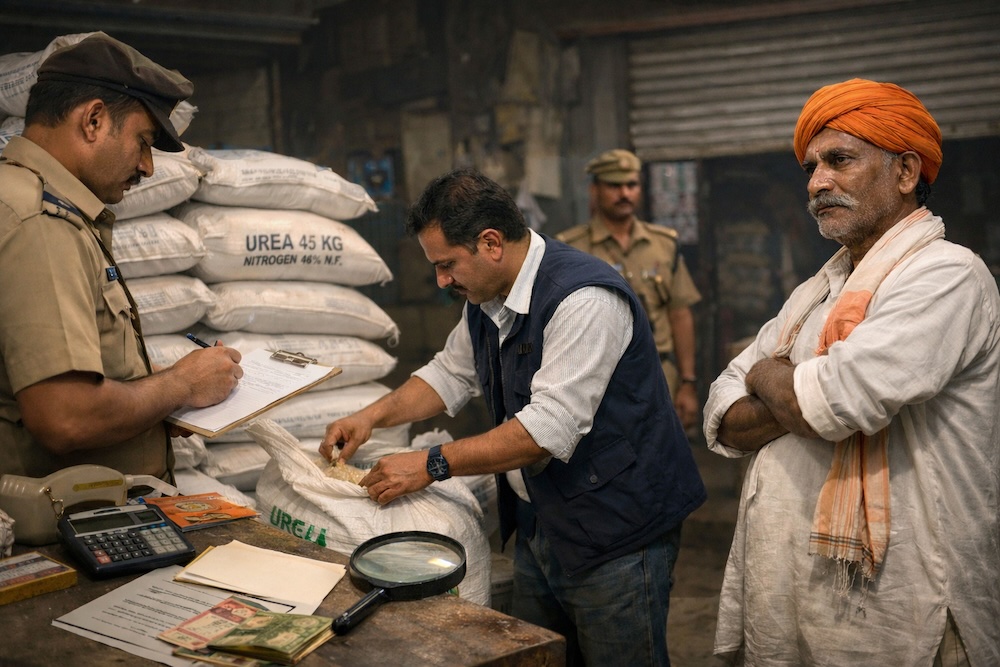
TL;DR Despite heavy subsidies and regulation, fertiliser black marketing continues to persist in India. Between 2019–20 and 2023–24, states reported over 1,500 FIRs, more than 3,000 licence cancellations, over 5,000 licences suspended, and issued nearly 12,000 show-cause notices for fertiliser-related violations. Enforcement has been driven largely by a few states, including Bihar, Uttar Pradesh, Maharashtra, Madhya Pradesh, and Haryana. Provisional data for 2025–26 already shows 442 FIRs and 3,732 licence cancellations in just eight months, pointing to intensified enforcement ahead of key cropping seasons.
Context
Fertilisers are central to Indian agriculture. To keep them affordable, the government sells key fertilisers such as urea and DAP at prices far below their market cost, with the difference covered through subsidies. A 45 kg bag of urea, for instance, is sold to farmers at ₹242, even though its production and delivery cost is significantly higher.
This price gap creates strong incentives for misuse. Fertilisers may be hoarded, diverted to non-agricultural uses, sold above the maximum retail price, or withheld to create artificial shortages during peak sowing periods. To curb these practices, fertilisers are classified as an essential commodity under the Essential Commodities Act, 1955, and regulated through the Fertiliser Control Order, 1985, which empowers state governments to inspect dealers and take punitive action.
Who Compiles This Data?
The data is compiled by the Department of Fertilisers under the Ministry of Chemicals and Fertilisers, based on information reported by state governments. It is released publicly through Lok Sabha questions and answers, particularly in response to queries on fertiliser shortages, hoarding, and black marketing.
Where can I download Clean & Structured Data on Fertiliser Enforcement?
Clean, structured, and ready-to-use datasets related to year and state-wise enforcement actions against fertiliser black marketing can be downloaded from Dataful.
Key Insights
FIRs rise sharply during periods of supply stress
At the national level, FIRs related to fertiliser black marketing show clear spikes during years marked by supply disruption or heightened demand.
- FIRs rose from 73 in 2019–20 to 362 in 2020–21, nearly a fivefold increase.
- They peaked at 452 in 2021–22, before declining to 238 in 2023–24.
- In 2025–26 (provisional), 442 FIRs were already registered by late November.
This pattern suggests that enforcement activity intensifies when shortages are anticipated, particularly ahead of the Rabi and Kharif seasons.
Licence actions reveal sustained regulatory pressure
Licence cancellations and suspensions consistently outnumber FIRs, indicating that most violations are dealt with through administrative action rather than criminal cases.
- Licence suspensions peaked at nearly 2,000 in 2020–21.
- Licence cancellations rose sharply again in 2025–26, crossing 3,700 nationwide in provisional data.
- On average, India cancels or suspends over 1,500 fertiliser dealer licences each year.
Suspensions are typically temporary, while cancellations usually reflect repeated or serious violations.
Enforcement is concentrated in a handful of states
In the current financial year (2025–26, provisional data up to 28 November 2025), fertiliser enforcement is sharply concentrated in a few states.
- Uttar Pradesh dominates enforcement action, accounting for over 2,700 licence cancellations, the highest in the country by a wide margin. It also recorded 165 FIRs and over 2,000 show-cause notices, indicating large-scale regulatory intervention.
- Bihar continues to see intense action, with 77 FIRs, over 600 licence cancellations, and more than 1,000 show-cause notices, reflecting persistent market irregularities.
- Rajasthan reported 46 FIRs and nearly 600 show-cause notices, placing it among the top states for enforcement this year.
- Maharashtra recorded 16 FIRs and licence action through cancellations and notices, showing continued monitoring even if criminal cases are fewer.
- Several large states, including Kerala and West Bengal, reported no enforcement actions so far this year, an anomaly given their size and fertiliser usage.
Overall, 2025–26 data shows that fertiliser black-marketing enforcement is not evenly spread across India, but driven largely by a small set of states, raising questions about the prevalence of such practices, inspection capacity, reporting practices, and regulatory priorities in others.
Why Does It Matter?
Fertiliser black marketing directly affects farm input costs, crop planning, and ultimately food prices. When subsidised fertilisers are hoarded or diverted, farmers face shortages or inflated prices even when national supply levels appear adequate.
The data suggests that India’s fertiliser challenge is less about production and more about last-mile governance. While digital tools such as the Integrated Fertiliser Monitoring System help track movement, enforcement still relies heavily on state-level inspections and reporting.
For policymakers, the takeaway is clear: subsidies without strong enforcement create scope for misuse. For farmers, the numbers explain why fertiliser shortages and market distortions continue to surface year after year.
Key Numbers (2019–20 to 2025–26*)
- All India FIRs lodged:
2019–20: 73 → 2021–22: 452 → 2023–24: 238 → 2025–26*: 442 - All India licence cancellations:
2019–20: 194 → 2021–22: 830 → 2023–24: 367 → 2025–26*: 3,732 - Licence suspensions:
Peak of nearly 2,000 in 2020–21 - All India show cause notices:
2019–20: 1,767 → 2021–22: 1,932 → 2023–24: 2,921 → 2025–26*: 5,258
*2025–26 data is provisional and available up to 28 November 2025.
Note: Featured image created with ChatGPT


