NACH E-Mandates Scale Up, But Rejections Rise
TL;DR NACH e-mandates have rapidly become the backbone of recurring digital payments in India, with transaction volumes and values nearly doubling over the past few years. But this scale-up has come with a parallel rise in rejected mandates, highlighting growing operational and consumer-side frictions within an increasingly automated payments system.
Context
Not long ago, paying bills was an act of remembrance. Calendar dates were circled, reminders were set, and the cost of forgetting arrived as a late fee or a follow-up call. Payments were an active task, not a background process. That changed with the arrival of E-mandates. E-mandates shifted the burden from memory to systems. Today, these auto-debits power everyday expenses from loan EMIs, insurance premiums, investments, and subscriptions, running quietly in the background. As more people and businesses adopted this system, the NACH platform emerged as the backbone that handles these recurring payments at scale across banks.
Who compiles this data?
The data on the monthly usage statistics of various products, such as UPI, NETC, including NACH, is compiled by the National Payments Corporation of India.
Where can I download clean & structured data related to the National Payments Corporation of India?
Clean, structured, and ready-to-use datasets related to the National Payments Corporation of India (NPCI) can be downloaded from Dataful. Monthly statistics related to different products of NPCI, such as UPI, NACH, NETC, AePS, among others, are available. These statistics typically cover transaction volume (number of transactions), transaction values (₹), uptime, downtime, declines and so on.
Key Insights
NACH Mandates expands its footprint
An E-mandate is a digital consent that enables automatic recurring payments such as EMIs, SIPs, insurance premiums, and subscriptions. Through the e-NACH framework, these mandates operate seamlessly across banks, allowing users to set flexible schedules such as daily, monthly, or annual. Once authorised, amounts are debited or credited automatically on due dates, ensuring payments go through on time without manual intervention.
The data on debit transactions routed through the NACH platform point to a steady upward trend in both volume and value. The total transaction volumes rose from 99 crore in 2021–22 to 197 crore in 2024–25, nearly doubling over three years. Over the same period, transaction value increased from ₹9.5 lakh crore to ₹21.9 lakh crore. The daily average transaction volumes increased from about 3 million in January 2021–22 to 6 million by December 2025–26, with average daily transaction value rising from ₹2,926 crore to ₹7,802 crore, reflecting the platform’s deepening adoption.
As transactions on NACH surge, rejected mandates also rise
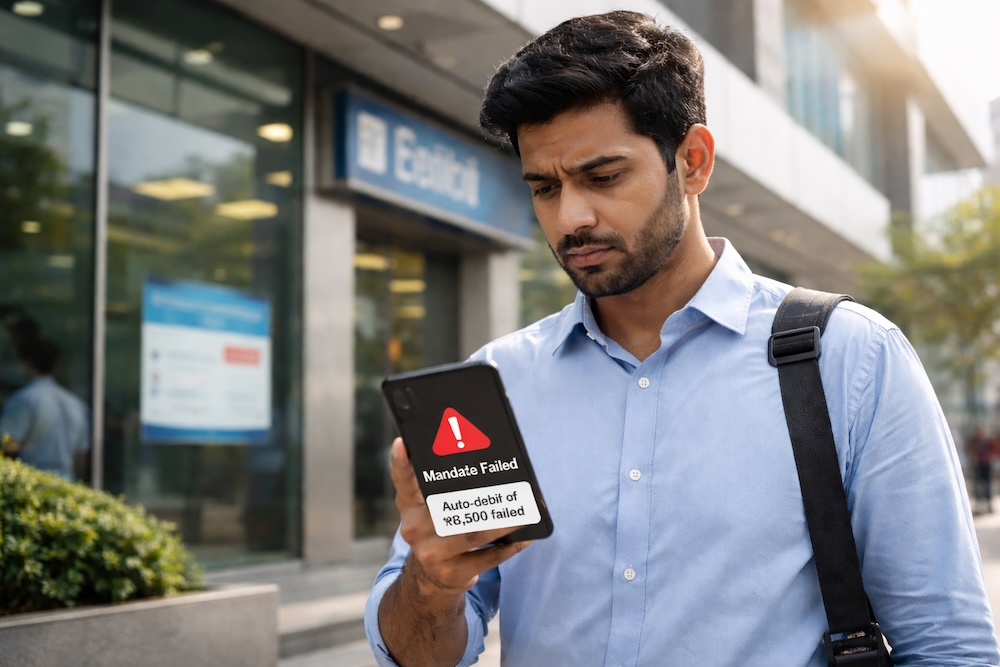
Within the NACH debit framework, transactions are first initiated against a customer’s account, a step known as a “presentation”, and are completed as a “final credit” only if sufficient funds are available. This process is supported by the Mandate Management System (MMS), which enables the automated exchange and processing of mandate information with defined timelines for acknowledgement and confirmation, covering both e-mandates submitted through data file uploads and paper mandates submitted with images and data files. However, data on mandates processed through this system point to a growing challenge: the share of rejected mandates has risen steadily over time, doubling from 28% in 2017–18 to 55% in 2025–26 (as of November 2025), even as overall volumes continue to expand.
Why does it matter?
E-mandates thrive on trust and reliability. Rising rejection rates risk undermining both. For consumers, failed debits can mean missed EMIs, penalties, or disrupted services. For lenders, insurers, and platforms that depend on predictable cash flows, higher rejections increase operational costs and credit risk. At a system level, the trend suggests that scale alone is not enough; improving mandate quality, account readiness, and processing efficiency will be critical to ensuring that NACH’s growth remains sustainable rather than fragile.
Key Numbers
- NACH Total debit Transaction volumes and values
- Transaction volumes (Crores): 2021-22: 99.3; 2025-26 (Till December): 159.7
- Transaction values (₹ Lakh Cr): 2021-22: 9.5 ; 2025-26 (Till December): 19.6
- Proportion of mandates rejected out of total mandates processed (MMS)
- 2017-18: 28%; 2020-21: 45% ; 2025-26(Till November): 55%
Note: Featured image generated with ChatGPT